July 5, 2026

Google latest SEO Update

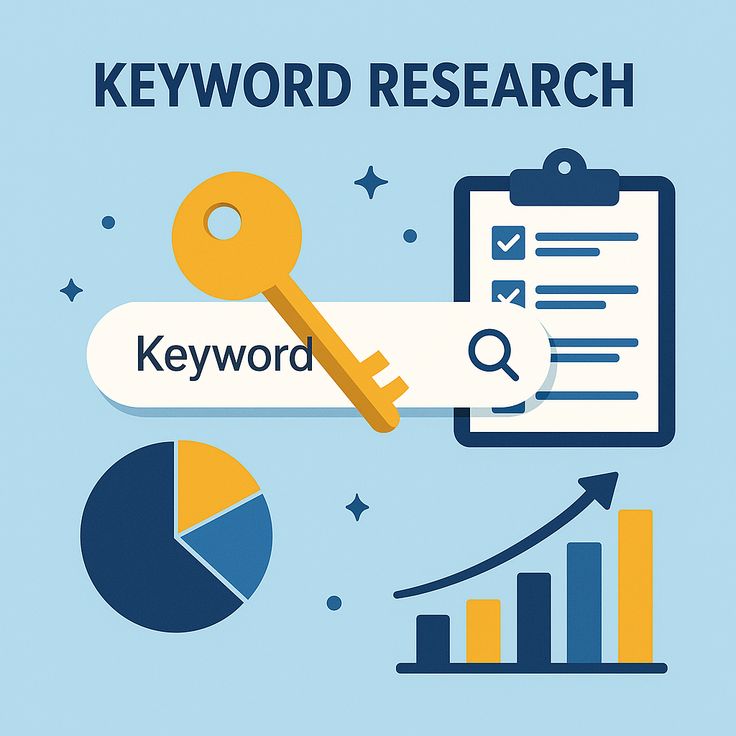
Keyword Research Tools

SEO Field Recommended Value SEO Title Keyword Research Tools: The Ultimate 2026 Guide Meta Description Discover the best keyword research tools for 2026. Compare Ahrefs, SEMrush, free tools & more to find high-ranking, low-competition keywords fast. URL Slug /keyword-research-tools-guide/ Focus Keyword keyword research tools Target Keyword Density ≈1–1.5% Recommended Schema Article, FAQPage, HowTo   Note for publisher: This article is a comprehensive, ready-to-edit draft built for Elementor. Tool names, feature sets, and pricing tiers change frequently — please verify current pricing and feature details directly on each vendor’s website before publishing, and update the numbers in the case study and comparison table with your own real data if available. Introduction Imagine spending weeks writing what you believe is the perfect blog post, hitting publish, and then watching it sit on page seven of Google with almost no visitors. It is one of the most frustrating experiences in content marketing, and it happens to beginners and experienced marketers alike. The usual culprit is not bad writing. It is skipping keyword research. Keyword research is the process of discovering what your audience is actually typing into Google, YouTube, Amazon, or any other search engine, and then using that insight to shape your content, product pages, and marketing strategy. It sounds simple, but done well it is the single highest-leverage activity in SEO, because it tells you exactly what people want before you spend a single hour creating content for them. In this guide, you will learn what keyword research is, why it matters, the different types of keywords you need to know, and a complete step-by-step process for finding profitable, ranking-worthy keywords. We will also review the best keyword research tools on the market in 2026 — free and paid — compare them side by side, walk through a realistic case study, and answer the most common questions beginners and professionals ask about keyword research. Whether you run a personal blog, an ecommerce store, a SaaS company, a local business, or an SEO agency, this guide is designed to give you a practical, actionable framework you can start using today. What Is Keyword Research? Keyword research is the practice of identifying, analyzing, and prioritizing the exact words and phrases people use when searching for information, products, or services online. It combines data (search volume, competition, trends) with an understanding of human intent (why someone is searching) to help you create content that ranks and converts. Definition At its core, keyword research answers one question: what language does my audience actually use? A business owner might call their product a ‘customer relationship management system,’ while their customers simply search for ‘CRM software.’ Keyword research bridges that gap between how a business describes itself and how customers actually search. Purpose The purpose of keyword research is threefold: to discover demand (are people searching for this at all?), to gauge difficulty (can I realistically rank for this?), and to understand intent (what does the searcher actually want to see?). Get all three right, and you can build content that both ranks and satisfies the reader — which is exactly what Google rewards. Importance ●        It removes guesswork from content planning. ●        It reveals what your competitors are ranking for and where their gaps are. ●        It helps prioritize effort toward keywords you can realistically win. ●        It aligns content with buyer journey stages, from awareness to purchase. ●        It protects you from wasting months of writing on topics nobody searches for. Examples A yoga studio owner might assume people search ‘holistic wellness center,’ but keyword research could reveal that the real search volume is concentrated around ‘yoga classes near me’ and ‘beginner yoga classes.’ A SaaS founder might discover that ‘best project management software for remote teams’ gets far more qualified traffic than their original target, ‘enterprise workflow solution.’ Real-World Applications ●        Blogging: choosing topics that already have proven search demand. ●        Ecommerce: optimizing product titles and category pages for buyer-intent terms. ●        YouTube: finding video titles and tags that match what people are searching for. ●        Paid advertising: selecting cost-effective keywords for Google Ads campaigns. ●        Content strategy: building topic clusters that establish topical authority. Why Keyword Research Matters for SEO Keyword research is not a one-time task you complete before writing a blog post. It is the foundation that everything else in SEO is built on. Here is why it matters so much. Higher Rankings Targeting keywords that match your site’s authority level dramatically increases your odds of ranking. A brand-new website chasing a keyword that only established, high-authority domains rank for is unlikely to succeed. Keyword research helps you find realistic, winnable opportunities. Better Traffic Not all traffic is equal. Keyword research helps you attract visitors who are genuinely interested in your topic, product, or service, rather than random visitors who bounce immediately. Improved Conversions Commercial and transactional keywords (like ‘buy running shoes online’) attract visitors who are closer to making a decision, which means higher conversion rates compared to broad, purely informational traffic. Understanding User Intent Good keyword research tells you not just what people search, but why. This lets you match your content format (blog post, product page, comparison guide, video) to what searchers actually expect to find. Competitive Advantage By analyzing which keywords your competitors rank for, you can identify gaps in their content and opportunities they have missed entirely. Better Content Planning Instead of guessing what to write next, keyword research gives you a data-backed content calendar built around real demand. Increased ROI Every hour spent creating content is an investment. Keyword research ensures that investment is directed toward topics with a real chance of generating traffic, leads, and revenue. 💡 Pro Tip Before writing a single word, always ask: ‘What would I type into Google if I wanted this information?’ Then verify your guess with real search data instead of relying on assumptions. Types of Keywords Not all keywords serve the same purpose. Understanding the different categories helps you build a balanced content strategy that covers

Google latest SEO Update

Future of search optimization

SEO Metadata & Setup (for your Elementor / Yoast / RankMath fields) 10 SEO Title Options ⦁ The Future of Search Optimization: AI, AEO, GEO & SEO Beyond 2026 ⦁ Future of SEO: How AI Search, AEO, and GEO Are Changing Google Forever ⦁ AI Search Optimization Guide: The Future of SEO, AEO & GEO in 2026 ⦁ Beyond Google: The Future of Search Optimization in the AI Era ⦁ SEO in 2026 and Beyond: Mastering AI, AEO, GEO & Search Experience ⦁ The Future of Search Optimization: A Complete AI SEO Playbook ⦁ How AI Overviews Are Reshaping SEO: The Future of Search Optimization ⦁ AEO vs SEO vs GEO: The Future of Search Optimization Explained ⦁ What’s Next for SEO? The Future of Search Optimization Beyond 2026 ⦁ The Future of Search Optimization: Winning Visibility in an AI-First World Meta Title The Future of Search Optimization: AI, AEO & GEO Guide (2026) 5 Meta Descriptions ⦁ Discover the future of search optimization in 2026. Learn how AI, AEO, GEO, and SEO combine to boost visibility in Google AI Overviews and beyond. ⦁ AI is rewriting the rules of search. Explore the future of search optimization, from AEO and GEO to E-E-A-T, with a step-by-step 2026 action plan. ⦁ Is SEO dead? No — it’s evolving. See how the future of search optimization blends AI Search, AEO, GEO, and SXO for long-term organic growth. ⦁ A complete 2026 guide to the future of search optimization: AI Overviews, conversational search, entity SEO, and a 25-point expert action checklist. ⦁ Future-proof your content strategy. This guide breaks down the future of search optimization — AI SEO, AEO, GEO, and the ranking factors that matter now. SEO-Friendly URL Slug /future-of-search-optimization-ai-aeo-geo-seo-2026/ H1 Title (use as the page’s single H1 in Elementor) The Future of Search Optimization: How AI, AEO, GEO, and SEO Will Shape Digital Marketing Beyond 2026 💡 How to use this document:  In Elementor, paste the body below into a Text Editor / theme-builder widget, set the first heading to H1 (already styled), and keep H2/H3 nesting intact for on-page SEO. Add the FAQ block using an FAQ or Accordion widget so it can also carry FAQ schema.   Table of Contents ⦁ 1. Introduction ⦁ 2. What Is Search Optimization? ⦁ 3. The Evolution of Search ⦁ 4. How AI Is Transforming Search ⦁ 5. Understanding SEO, AEO, GEO, and SXO ⦁ 6. Emerging Search Trends for 2026 and Beyond ⦁ 7. Future Google Ranking Factors ⦁ 8. How to Optimize for the Future of Search ⦁ 9. The Role of E-E-A-T in AI Search ⦁ 10. Building Topical Authority ⦁ 11. Search Experience Optimization (SXO) ⦁ 12. Best Tools for Future Search Optimization ⦁ 13. Common Mistakes to Avoid ⦁ 14. Real-World Case Study ⦁ 15. Future Predictions (Next 5–10 Years) ⦁ 16. Expert Strategies to Future-Proof Your Search Optimization ⦁ 17. Frequently Asked Questions ⦁ 18. Conclusion ⦁ 19. Glossary of Terms ⦁ 20. Bonus: Checklists, Schema & Social Copy   The Future of Search Optimization: How AI, AEO, GEO, and SEO Will Shape Digital Marketing Beyond 2026 Introduction Search is no longer a list of ten blue links. Google’s AI Overviews now appear above traditional results for a large share of informational queries, and a growing number of searches end without a single click to any website. At the same time, millions of people are asking ChatGPT, Perplexity, and Claude the exact questions they used to type into Google. The result is a search landscape that looks nothing like it did even three years ago — and it is still changing. This shift is not a minor algorithm update. It is a structural change in how information is discovered, summarized, and delivered. Answer engines pull from multiple sources, synthesize them into a single response, and often satisfy the user’s need before they ever see your website. For content creators and businesses that built their entire growth strategy around ranking in ten blue links, this is a wake-up call. The good news is that search optimization is not dying — it is expanding. Search Engine Optimization (SEO) is being joined by Answer Engine Optimization (AEO), Generative Engine Optimization (GEO), and Search Experience Optimization (SXO). Together, these disciplines form what we’ll call “the future of search optimization”: a unified approach to earning visibility across traditional search, AI-generated answers, voice assistants, and conversational chat interfaces. In this guide, you’ll learn exactly how AI is transforming search, what AEO and GEO mean in practice, which ranking factors will matter most going forward, and how to build a content strategy that performs well no matter where or how people search. Whether you’re a blogger, an in-house marketer, an agency, or a business owner, this framework will help you future-proof your organic visibility for 2026 and beyond.   What Is Search Optimization? “Search optimization” is the umbrella term for every practice used to help content get discovered, understood, and recommended by any system that answers a question — a search engine, an AI chatbot, a voice assistant, or a generative overview. Traditional SEO is one part of this umbrella; it is no longer the whole thing. From Keywords to Intent Early SEO was largely mechanical: match the words in the query to the words on the page. Today’s systems understand meaning, not just matching. A search for “best running shoes for flat feet” is interpreted as a request for a comparison of specific products suited to a specific biomechanical need — not just a page stuffed with the phrase “running shoes.” Search Engines vs. Answer Engines A traditional search engine returns a ranked list of links and lets the user do the synthesizing. An answer engine does the synthesizing for the user — it reads multiple sources, extracts the relevant facts, and produces a single, often conversational, answer. Google’s AI Overviews, Bing Copilot, Perplexity, and chat-based assistants all function as answer engines. Being “visible” in this environment means being the source an

Google latest SEO Update

Zero-Click Searches: How to Get Traffic in 2026

SEO Title Options (Choose One for Publishing) 1.   Zero-Click Searches: How to Get Traffic in 2026 (Complete Guide) 2.   Zero-Click Search SEO: 25 Ways to Win Traffic in the AI Search Era 3.   How to Get Traffic From Google in 2026 Despite Zero-Click Searches 4.   Zero-Click Searches Explained: AI Overviews, AEO & GEO for 2026 5.   The 2026 Guide to Zero-Click Searches and AI Search Optimization 6.   Beat Zero-Click Search: A Practical SEO Playbook for 2026 7.   Zero-Click Searches Are Here to Stay — Here’s How to Get Traffic Anyway 8.   AI Overviews & Zero-Click Search: The Complete 2026 SEO Guide 9.   How to Rank in Google AI Overviews and Still Get Clicks (2026) 10. Zero-Click SEO in 2026: Answer Engine Optimization Strategies That Work Meta Title Zero-Click Searches 2026: How to Get Traffic From Google AI Overviews Meta Descriptions (Pick One) 11. Zero-click searches are reshaping Google. Learn what they are, why AI Overviews changed SEO, and 25 proven ways to grow organic traffic in 2026. 12. Discover how to win visibility and traffic in the age of AI Overviews, Featured Snippets, and zero-click search with this complete 2026 SEO guide. 13. A data-driven guide to zero-click searches: what they are, how Google AI Mode changed rankings, and the AEO/GEO strategies that still drive traffic. 14. Fewer clicks doesn’t mean less opportunity. Learn how to optimize for AI Overviews, Featured Snippets, and Answer Engine Optimization in 2026. 15. Everything marketers need to know about zero-click search in 2026: causes, impact, tools, checklists, and a step-by-step traffic recovery plan. URL Slug /zero-click-searches-how-to-get-traffic-2026   Zero-Click Searches: How to Get Traffic in 2026 More than half of all Google searches now end without a single click to any website. That is not a scare statistic from an SEO sales page — it is the baseline reality of search in 2026, and it is the reason so many site owners have watched organic traffic slide even while their rankings look fine in Search Console. The cause is not a mystery. Google AI Overviews now appear across a large share of queries, AI Mode has moved from experiment to default entry point for many searchers, and Featured Snippets, Knowledge Panels, and instant answers have spent years training people to expect the answer on the results page itself. Add voice assistants and AI chat tools into the mix, and “ranking #1” no longer guarantees a visitor. This guide is built for the marketers, bloggers, and business owners who need to stop reacting to that shift and start planning around it. You will learn exactly what zero-click searches are and why they are growing, how AI Overviews changed the mechanics of ranking, every major type of zero-click result you need to design content around, and — most importantly — twenty-five concrete tactics you can implement this quarter to rebuild traffic, visibility, and brand demand even in a search landscape where fewer people click through. This is a long, detailed guide because the topic deserves it. Use the table of contents below to jump to what you need, or read straight through to build a complete 2026 content strategy. Table of Contents ●      What Are Zero-Click Searches? ●      Why Zero-Click Searches Are Increasing ●      How Google AI Overviews Changed SEO ●      Types of Zero-Click Search Results ●      How Zero-Click Searches Affect Website Traffic ●      Why SEO Is Still Important ●      25 Proven Ways to Get Traffic in 2026 ●      Zero-Click SEO vs. Traditional SEO ●      Best Content Formats for AI Search ●      E-E-A-T and Zero-Click Search ●      Structured Data for AI Search ●      Common Mistakes to Avoid ●      Best SEO & AI Optimization Tools ●      Real-World Case Study ●      The Future of Search ●      Expert Tips: 20 Advanced Strategies ●      Frequently Asked Questions ●      Conclusion & Next Steps   What Are Zero-Click Searches? A zero-click search is any search query where the user gets the information they need directly on the search results page and never clicks through to a website. Instead of scrolling past ads and snippets to find a link worth opening, the searcher reads an AI-generated summary, a featured snippet, a knowledge panel, or a direct answer box and moves on with their day. How they work: Google’s ranking systems still crawl, index, and evaluate websites the same way they always have. What changes is the presentation layer. Rather than showing ten blue links, Google increasingly synthesizes an answer from one or more high-authority sources and places that answer above the traditional organic results. The underlying pages are still “ranked,” and some still receive citation links inside the AI answer, but many searchers stop reading before they reach those links. Examples of zero-click queries: ●      “What time zone is Chicago in” → instant answer box ●      “32 celsius to fahrenheit” → calculator widget ●      “best budget laptops 2026” → AI Overview summarizing multiple review sites ●      “weather in Prayagraj” → weather widget ●      “how does compound interest work” → AI Overview with a formula and short explanation ●      “capital of Australia” → knowledge panel Why Google introduced them: Google’s stated mission has always been organizing the world’s information and making it universally accessible. Instant answers, snippets, and now AI Overviews are a natural extension of that mission — they reduce the number of steps between a question and an answer, which improves the immediate user experience even as it changes the economics of publishing. The user behavior shift: Search behavior has moved from “search, scan links, click, read” to “search, read the summary, click only if I need more depth, a transaction, or a second opinion.” That means zero-click search has not eliminated demand for expert content — it has raised the bar for what content earns a click after the summary has already answered the surface-level question.   Why Zero-Click Searches Are Increasing Zero-click growth is not caused by one feature. It is the compounding effect of several overlapping systems Google has built over the past decade, all accelerating at once in

Google latest SEO Update

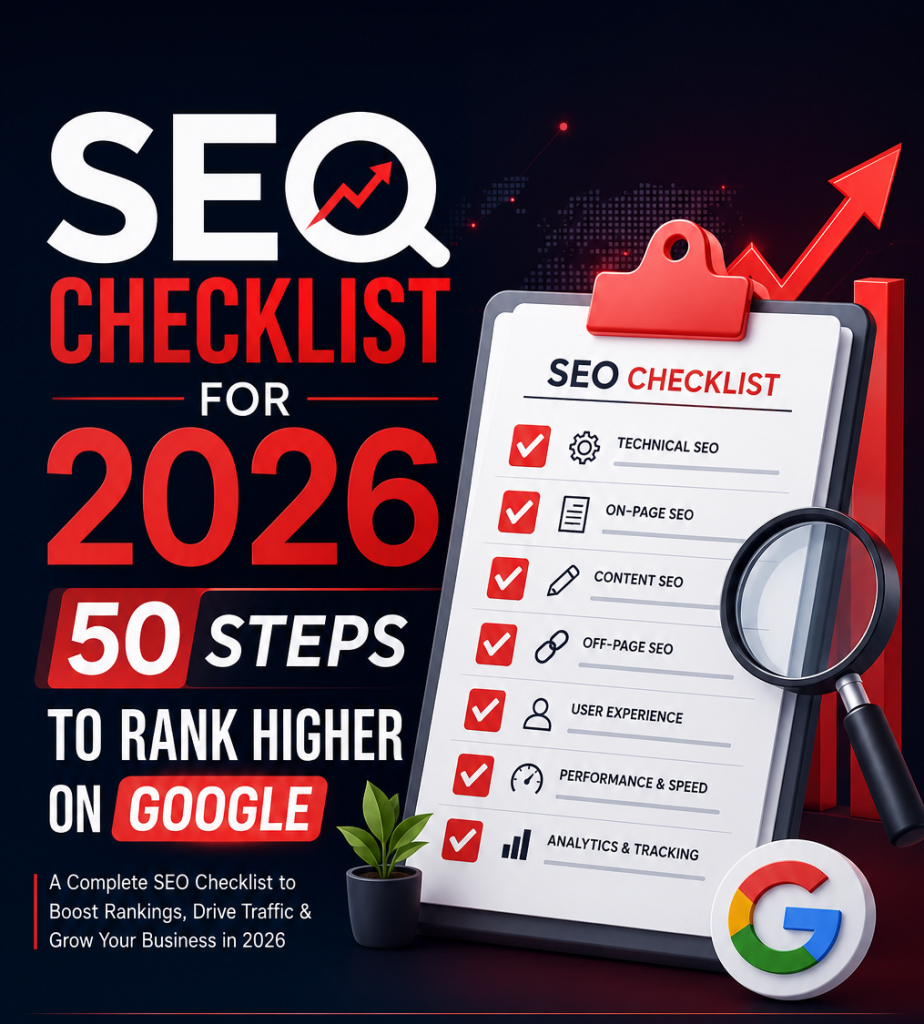
SEO Checklist for 2026: 50 Steps to Rank Higher on Google

10 SEO Title Options ●        SEO Checklist for 2026: 50 Steps to Rank Higher on Google ●        The Ultimate SEO Checklist for 2026 (50 Actionable Steps) ●        SEO Checklist 2026: A Complete Guide to Ranking on Google ●        50-Step SEO Checklist for 2026: On-Page, Technical & Off-Page SEO ●        How to Rank Higher on Google in 2026: The Complete SEO Checklist ●        2026 SEO Checklist: Keyword Research to AI Overview Optimization ●        The Complete Google SEO Checklist for 2026 (Beginner to Advanced) ●        SEO Guide 2026: 50 Steps Every Website Needs to Rank Higher ●        Website SEO Checklist 2026: Technical, On-Page & Content SEO ●        SEO Best Practices 2026: The Definitive Ranking Checklist Meta Title SEO Checklist for 2026: 50 Steps to Rank Higher on Google 5 Meta Descriptions ●        Follow this 50-step SEO checklist for 2026 to improve rankings, boost organic traffic, and optimize for Google AI Overviews, Core Web Vitals, and E-E-A-T. ●        A complete 2026 SEO checklist covering keyword research, on-page SEO, technical SEO, content, and link building — with examples and a downloadable workflow. ●        Want to rank higher on Google in 2026? Use this practical 50-point SEO checklist built for beginners, bloggers, agencies, and e-commerce sites. ●        Everything you need for a modern SEO strategy: 50 actionable steps covering technical SEO, content, AI search optimization, and off-page authority building. ●        This 2026 SEO checklist breaks down exactly what to fix first — from Core Web Vitals to E-E-A-T to AI Overview optimization — to grow organic traffic. URL Slug /seo-checklist-2026     Table of Contents ●        Introduction ●        What Is SEO in 2026? ●        Why Every Website Needs an SEO Checklist ●        The Ultimate SEO Checklist for 2026 ●        Google Ranking Factors in 2026 ●        SEO for Google AI Overviews ●        Common SEO Mistakes to Avoid ●        Best SEO Tools for 2026 ●        SEO Maintenance Workflow ●        Case Study: A 50-Step SEO Turnaround ●        Expert SEO Tips for 2026 ●        Frequently Asked Questions ●        Conclusion ●        Glossary of SEO Terms Introduction In 2026, more searches end without a click than ever before. Google’s AI Overviews now answer a huge share of queries directly on the results page, voice assistants field entire conversations, and users expect instant, trustworthy answers rather than a list of blue links. If your SEO strategy still looks like it did in 2021, you’re not just falling behind — you’re becoming invisible. That shift doesn’t mean SEO is dying. It means SEO is changing shape. Ranking well in 2026 still depends on the fundamentals — solid keyword research, clean technical architecture, genuinely helpful content, and real authority — but each of those fundamentals now has an AI-search layer stacked on top of it. Google’s systems increasingly evaluate content the way a knowledgeable editor would: Is this accurate? Is it written by someone who actually knows the subject? Does it fully answer the question, or just circle around it? That’s exactly why a checklist matters. SEO has so many moving parts — keywords, on-page structure, technical health, content quality, backlinks, and now AI Overview optimization — that it’s easy to nail four out of five and quietly lose rankings because of the fifth. A checklist keeps you honest and consistent, whether you’re auditing your first blog or managing SEO across dozens of client sites. This guide gives you a complete, 50-step SEO checklist for 2026, organized into five practical categories: keyword research, on-page SEO, content SEO, technical SEO, and off-page SEO. Along the way, you’ll get Google’s current ranking factors, a breakdown of how to optimize for AI Overviews, the most common mistakes still tanking rankings, a comparison of the best SEO tools, a realistic case study, 20+ expert tips, and answers to the 20 SEO questions people ask most. Let’s get into it. What Is SEO in 2026? SEO — search engine optimization — is still the practice of improving a website so it appears higher in search results and attracts more relevant, organic traffic. What’s changed is how search engines decide what “higher quality” means. Modern SEO is AI-driven Google’s ranking systems now lean heavily on machine learning to interpret meaning, not just match keywords. Instead of asking “does this page contain the phrase the user typed?” Google asks “does this page answer what the user actually wants to know?” Semantic search and search intent Semantic search means Google interprets the concepts and relationships behind a query, not just the literal words. A search for “best running shoes for flat feet” is understood as a comparison-and-recommendation query from someone likely dealing with overpronation — so content that only lists shoe names without addressing that context underperforms. User experience as a ranking signal Page experience — how fast a page loads, how stable it is while loading, and how easy it is to use on mobile — directly affects whether Google considers a page a good answer, not just whether the content is accurate. E-E-A-T: Experience, Expertise, Authoritativeness, Trust Google’s quality guidelines ask reviewers (and, increasingly, its ranking systems) to weigh whether content demonstrates first-hand experience, genuine subject-matter expertise, authority in the space, and overall trustworthiness. In 2026, this is no longer a “nice to have” for YMYL (Your Money or Your Life) topics — it shapes visibility across almost every niche. Entity-based SEO Google increasingly organizes the web around entities — people, places, organizations, products, and concepts — rather than isolated keywords. Structuring your content and markup around clear entities helps Google understand what your page is really about and how it connects to other trusted sources. Why Every Website Needs an SEO Checklist ●        Avoiding common mistakes: A checklist catches the small technical and on-page errors — missing alt text, broken canonical tags, thin meta descriptions — that quietly cap your rankings. ●        Staying consistent: SEO isn’t a one-time project. A checklist turns best practices into a repeatable process your whole team can follow, regardless of who’s publishing. ●        Improving rankings systematically: Instead of guessing what to fix next,

Google latest SEO Update

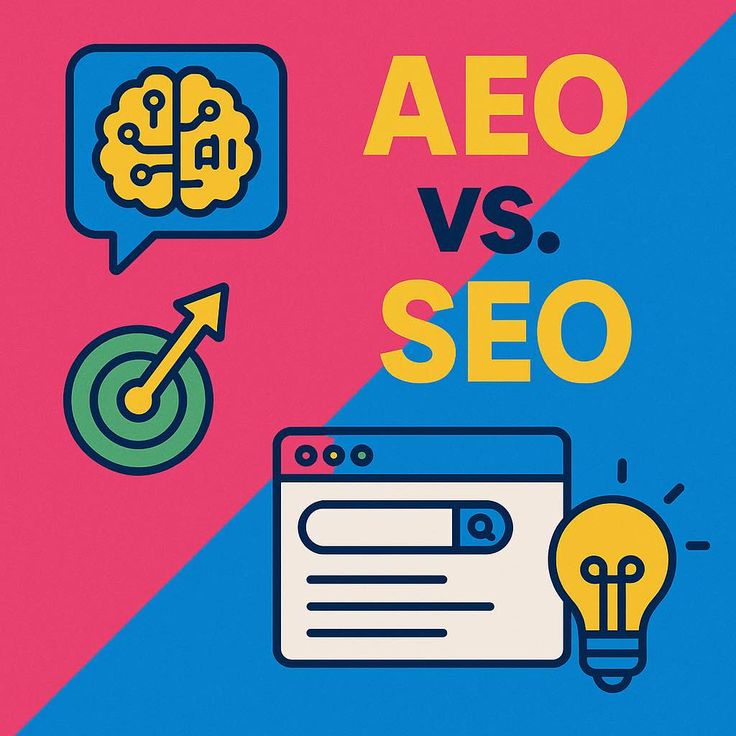
AEO vs SEO: What’s the Difference and Which One Matters in 2026

SEO Metadata Meta Title: AEO vs SEO in 2026: The Complete Guide to Winning AI & Google Search URL Slug: /aeo-vs-seo-2026-guide Primary Keyword: AEO vs SEO 10 SEO Title Options 1.      AEO vs SEO: What’s the Difference and Which One Matters in 2026? 2.      AEO vs SEO in 2026: The Complete Guide to Winning Google and AI Search 3.      What Is AEO? AEO vs SEO Explained for Marketers in 2026 4.      SEO vs AEO: How Google’s AI Overviews Are Rewriting the Rules 5.      AEO vs SEO 2026: Which Strategy Wins in the Age of AI Search? 6.      From SEO to AEO: How to Future-Proof Your Content for AI Search 7.      AEO vs SEO — The Definitive 2026 Guide for Bloggers and Brands 8.      Answer Engine Optimization vs Search Engine Optimization: A 2026 Playbook 9.      Is SEO Dead? AEO vs SEO and the Future of Search in 2026 10.   AEO vs SEO Explained: How to Rank in Google Search AND AI Overviews 5 Meta Description Options 1.      AEO vs SEO: learn the real differences, why Google AI Overviews are changing search, and how to optimize content for both in 2026. Full guide + checklist. 2.      Confused about AEO vs SEO? This 2026 guide breaks down Answer Engine Optimization and Search Engine Optimization, with a step-by-step framework to win both. 3.      Is AEO replacing SEO? Discover how AI Overviews, LLMs, and answer engines are reshaping Google Search — and the exact strategy to future-proof your content. 4.      AEO vs SEO explained simply: what each means, how they differ, and a practical 2026 optimization framework for bloggers, marketers, and businesses. 5.      Everything you need to know about AEO vs SEO in 2026 — definitions, comparison table, best practices, tools, FAQs, and a free checklist to get started.   AEO vs SEO: What’s the Difference and Which One Matters in 2026? Table of Contents •      Introduction: Search Is Not What It Used to Be •      What Is SEO? •      What Is AEO? •      Why Google Search Is Changing •      AEO vs SEO: Key Differences •      Similarities Between AEO and SEO •      How Google AI Overviews Work •      How to Optimize Content for AEO •      How to Optimize Content for Traditional SEO •      Can AEO Replace SEO? •      AEO + SEO: The Winning Strategy •      Best Practices for 2026 (30+ Tips) •      Common Mistakes to Avoid •      Tools for AEO and SEO •      The Future of Search •      Case Study: Combining SEO and AEO •      Professional Tips to Win Both Google Search and AI Search •      FAQs •      Conclusion   Introduction: Search Is Not What It Used to Be Here’s a number worth sitting with: a growing share of Google searches now end without a single click to any website, because the answer appears directly on the results page. Add AI Overviews, AI Mode, and a wave of chatbot-based search tools like ChatGPT, Perplexity, and Copilot, and it’s clear that “search” in 2026 means something very different from what it meant even three years ago. Google is no longer just a list of ten blue links. It’s an answer engine. It reads your content, extracts the most useful facts, synthesizes them with information from other sources, and hands the user a complete response — sometimes with no visit to your site required at all. This is exactly why a new discipline has emerged alongside traditional Search Engine Optimization (SEO): Answer Engine Optimization (AEO). And it’s why so many marketers are asking the same question — is AEO replacing SEO, or do the two need to work together? This guide gives you the complete picture. You’ll learn exactly what SEO and AEO mean, how they differ, where they overlap, how Google’s AI Overviews actually work, and a practical, step-by-step framework for optimizing content so it performs in classic Google Search results and in AI-generated answers. We’ll cover tools, common mistakes, a real-world style case study, 30+ actionable tips, and a full FAQ section you can use for your own featured-snippet and voice-search optimization. If you only take one idea from this article, let it be this: SEO and AEO are not rivals. They are two lenses on the same goal — being the most trustworthy, useful, and clearly structured answer to a real question. Let’s break down exactly how to do that. What Is SEO? Search Engine Optimization (SEO) is the practice of improving a website so that search engines like Google can find it, understand it, and rank it highly for relevant queries. The goal is simple: show up when someone searches for something your content can answer, then earn the click. A Short History of SEO SEO started in the mid-1990s as a game of keyword matching — stuff a page with the right words and you’d rank. Google’s arrival in 1998, followed by PageRank (which measured authority through backlinks), changed everything. Over the next two decades, algorithm updates like Panda, Penguin, Hummingbird, RankBrain, and BERT gradually shifted ranking away from exact keyword matching and toward relevance, quality, and genuine user intent. By the early 2020s, SEO had matured into a discipline built on technical performance, content quality, and authority signals — not tricks. That foundation is exactly what makes content ready for the AI search era too. How Search Engines Work: Crawling, Indexing, Ranking Every search engine performs three core steps: •      Crawling — bots (like Googlebot) discover pages by following links and sitemaps. •      Indexing — the content of each page is analyzed and stored in a massive database, tagged by topic, entities, and structure. •      Ranking — when someone searches, the engine scores indexed pages against hundreds of signals to decide the order of results. Traditional Ranking Factors Classic SEO ranking factors fall into three buckets: •      On-page SEO: title tags, headers, keyword usage, content depth, internal links, image alt text. •      Off-page SEO: backlinks, brand mentions, social proof, digital PR. •      Technical SEO: site speed, mobile-friendliness, crawlability, structured data, Core Web Vitals, HTTPS. Keywords still matter in 2026, but

Email Marketing

Email Copywriting Tips

Email Copywriting Tips: Write Emails That Get Opened, Read, and Convert SEO Metadata ●        SEO Title: Email Copywriting Tips: Write Emails That Convert (2026) ●        Meta Description: Discover proven email copywriting tips to boost open rates, clicks, and sales. Real examples, formulas, and templates included. ●        URL Slug: /email-copywriting-tips ●        Primary Keyword: Email Copywriting Tips ●        Word Count Target: 4,000–5,500 words Table of Contents ●        What Is Email Copywriting? ●        Why Email Copywriting Matters ●        The Psychology Behind High-Converting Emails ●        Know Your Audience Before Writing ●        How to Write Irresistible Subject Lines ●        Write an Engaging Preview Text ●        Write a Powerful Opening Line ●        Keep Email Copy Simple and Readable ●        Focus on Benefits, Not Features ●        Master the Art of Storytelling ●        Create Strong Calls-to-Action ●        Personalization Techniques That Increase Conversions ●        Email Copywriting Formulas ●        Different Types of Marketing Emails ●        30 Email Copywriting Tips That Actually Work ●        Common Email Copywriting Mistakes ●        Best Email Copywriting Tools ●        Real Email Copy Examples ●        A/B Testing Email Copy ●        Email Metrics to Track ●        The Future of Email Copywriting ●        Pro Tips from Professional Email Copywriters ●        Frequently Asked Questions ●        Conclusion Key Takeaways ●        Email copywriting is persuasive, benefit-driven writing built to earn an open, a click, and a conversion — not just informative writing. ●        Subject lines and preview text decide whether the rest of your email ever gets read, so they deserve as much effort as the body copy. ●        Proven psychological triggers — curiosity, urgency, scarcity, social proof, and personalization — consistently lift open and click rates. ●        Classic copywriting formulas like AIDA, PAS, and BAB give you a repeatable structure for any campaign. ●        Every email should have exactly one clear, benefit-focused call-to-action. ●        Testing and tracking the right metrics is how good email copy becomes great email copy over time. Introduction A well-written email can outperform a paid ad campaign, a social post, and a blog article combined — and it costs almost nothing to send. That is why email marketing consistently ranks among the highest-ROI channels available to businesses of every size, from solo freelancers to global SaaS companies. Yet most inboxes are crowded, attention spans are short, and a single weak subject line can send months of list-building effort straight to the trash folder. Picture this: you spend hours crafting the perfect offer, hit send to five thousand subscribers, and the open rate barely clears 12%. The problem almost never lies in the offer itself — it lies in the copy. Words are the entire product when it comes to email. There is no photography, no video, no salesperson standing beside the reader. Just a subject line, a few lines of preview text, and a block of copy competing for attention against dozens of other unread messages. This guide breaks down exactly how professional email copywriters think, structure, and write emails that get opened, read, and clicked. You will learn the psychology behind high-converting copy, proven formulas used by top marketers, real subject line and CTA examples you can adapt today, and the mistakes that quietly kill conversions. Whether you are writing your first welcome sequence or refining a mature lifecycle program, these email copywriting tips will help you write with more clarity, more persuasion, and more measurable results. What Is Email Copywriting? Email copywriting is the practice of writing persuasive, purposeful text specifically designed to prompt a reader to take action — opening the email, clicking a link, making a purchase, or replying. It sits at the intersection of marketing psychology, brand voice, and direct-response writing. Email writing simply conveys information: a newsletter update, a policy change, a shipping confirmation. Email copywriting goes further. Every sentence is built around a goal, every word is chosen for impact, and every element — subject line, preview text, opening line, body, and CTA — works together to move the reader toward a single next step. Persuasive writing matters because attention is the scarcest resource in a subscriber’s inbox. A reader decides whether to open your email in under two seconds, largely based on the subject line and sender name. Copywriting is what turns a passive scan into an active decision. Why Email Copywriting Matters Strong email copywriting directly affects the metrics that determine whether your email program is profitable. ●        Higher open rates: Compelling, curiosity-driven subject lines consistently outperform generic ones. ●        More clicks: Clear, benefit-focused body copy with a single strong CTA drives significantly more click-throughs than vague, feature-heavy copy. ●        Increased conversions: Persuasive copy that addresses objections and creates urgency turns clicks into completed purchases or sign-ups. ●        Better customer relationships: Emails written in a genuine, conversational voice build familiarity and trust over time. ●        Stronger brand trust: Consistent, honest, well-written communication signals professionalism and reliability. ●        Improved ROI: Because email has no ad spend or platform fees, even modest copy improvements produce outsized returns compared to paid channels. Industry benchmarks vary by sector, but marketers consistently find that segmented, well-written campaigns outperform generic blasts by a wide margin, and that subject line testing alone can shift open rates by several percentage points. The lesson: copy quality is not a nice-to-have, it is one of the biggest levers available in email marketing. The Psychology Behind High-Converting Emails Every high-converting email leans on one or more psychological triggers. Understanding these gives you a toolkit you can apply to any subject line, opening line, or CTA. ●        Curiosity: An open loop the reader wants closed — “You’re doing this wrong (and don’t even know it).” ●        Scarcity: Limited quantity increases perceived value — “Only 12 left in stock.” ●        Urgency: A closing window prompts immediate action — “Offer ends tonight at midnight.” ●        Trust: Transparency, testimonials, and consistency reduce perceived risk. ●        Reciprocity: Giving something valuable first (a tip, a discount, a resource) makes readers more willing to act. ●        Social proof: Numbers, reviews, and peer behavior reduce hesitation — “Join 40,000 marketers already subscribed.” ●        Personalization: Copy that

Email Marketing

Email Marketing Trends 2026

Email Marketing Trends 2026 Top Trends, Strategies, and Predictions Every Business Should Know A complete guide for marketers, business owners, and brands who want higher open rates, stronger engagement, and better ROI in 2026. SEO Elements (For Your Website / Elementor / Yoast Fields) Use these fields directly in your Elementor page settings or SEO plugin (Yoast/Rank Math) when you publish this post. SEO Title: Email Marketing Trends 2026: Top Strategies & Predictions Meta Title: Email Marketing Trends 2026 | Strategies, Tools & Predictions Meta Description: Discover the top email marketing trends 2026: AI personalization, automation, zero-party data & more. Boost open rates, ROI & engagement today. URL Slug: /email-marketing-trends-2026 Social Media Meta Title: Email Marketing Trends 2026: What Every Business Must Know Social Media Description: AI, hyper-personalization, zero-party data & interactive emails are reshaping inboxes in 2026. Here’s how to stay ahead and grow your ROI. Table of Contents (In Word, right-click the table above and choose “Update Field” to populate it. On your Elementor site, you can recreate this as an anchor-link list, or use an Elementor Table of Contents widget pointed at the headings below.) Introduction Email marketing has been declared “dead” almost every year since social media exploded onto the scene — and every year, it proves the opposite. In 2026, email remains one of the highest-ROI channels in all of digital marketing, with businesses reporting returns of roughly $36 to $45 for every $1 spent, according to data compiled by Litmus, Omnisend, and DemandSage. That is a return most other channels simply cannot match, whether you’re comparing it to paid search, social advertising, or display ads. But the email marketing of 2026 looks very different from the newsletters and blast campaigns of even three or four years ago. Three forces are reshaping the inbox right now. First, artificial intelligence has moved from a novelty to the backbone of modern email programs — writing subject lines, predicting the best send time, and personalizing content block by block for every single subscriber. Second, privacy regulations and the death of third-party cookies have pushed marketers toward zero-party and first-party data, meaning brands now have to earn information directly from customers rather than track it silently. Third, customer expectations have shifted: subscribers want emails that feel relevant, timely, and human — not generic broadcasts. If you run a business, manage a brand’s marketing, or write content for clients, understanding these shifts isn’t optional anymore. Companies that adapt early are seeing meaningfully higher engagement and revenue per send, while those that keep sending the same static newsletters are watching open rates slide and unsubscribe rates climb. In this guide, you’ll learn what email marketing looks like in 2026, the twelve biggest trends shaping the industry, the tools worth your budget, the strategies that actually move the needle, the mistakes still tripping up otherwise smart marketers, and where the channel is headed beyond 2026. Whether you’re a solo blogger, an eCommerce founder, or a SaaS growth marketer, you’ll walk away with a clear, actionable playbook. What Is Email Marketing? Email marketing is the practice of sending targeted, permission-based messages to a list of subscribers with the goal of building relationships, nurturing leads, and driving sales. Unlike social media or paid ads, it relies on a channel your business actually owns — your email list isn’t subject to an algorithm change or a platform ban. How It Works A typical email marketing program has four moving parts: list building (collecting subscriber emails through opt-in forms, lead magnets, or checkout flows), segmentation (grouping subscribers by behavior, demographics, or lifecycle stage), content and automation (the actual emails — newsletters, promotions, and triggered sequences), and analytics (tracking opens, clicks, conversions, and revenue to refine future campaigns). Why Businesses Still Rely on Email Marketing It’s a direct line to the customer with no algorithm standing in the way. It scales efficiently — sending to 10,000 people costs barely more than sending to 100. It produces measurable, attributable revenue, unlike many brand-awareness channels. It supports the entire customer journey, from first touch to loyal repeat buyer. Benefits Over Other Marketing Channels Compared with social media, email delivers substantially higher conversion rates — recent benchmark data puts email conversion rates around 4.2%, compared with under 1% for social traffic. Compared with paid search, email has no ongoing cost-per-click; once someone is on your list, reaching them again is nearly free. And unlike organic reach on social platforms, which keeps shrinking, your email list is a durable, owned asset that keeps compounding in value as it grows. Why Email Marketing Is Still Important in 2026 Despite predictions of its decline, email marketing keeps earning its place at the center of the marketing stack. Here’s what the current data shows about why it still matters so much. ROI Statistics Email marketing delivers an average return of roughly $36–$45 for every $1 spent — the highest ROI of any digital marketing channel, according to Litmus and Omnisend benchmark data. Retail, eCommerce, and consumer goods brands see some of the strongest returns, with reported ROI as high as 4,500%. Around 30% of marketers rate email as their single highest-ROI channel, with another 43% rating it as medium-ROI — a consistency few other channels can claim. Automated emails, while representing a small share of total volume, are responsible for a disproportionately large share of email-driven revenue. Customer Retention Email shines brightest after the first sale. Lifecycle emails — post-purchase sequences, replenishment reminders, loyalty updates — keep your brand top-of-mind without the cost of re-acquiring a customer through ads. Retaining an existing customer is dramatically cheaper than acquiring a new one, and email is the most cost-effective tool for doing it. Lead Nurturing Not every visitor buys on the first visit. Automated nurture sequences — welcome series, educational drips, cart abandonment flows — keep leads warm and gradually move them toward a purchase decision, often converting people who would otherwise be lost after a single site visit. Direct Communication There’s no algorithm deciding

Email Marketing

AI in Email Marketing

AI in Email Marketing: The Ultimate Guide to Smarter Campaigns, Automation & Higher Conversions (2026) Introduction Email marketing has always been one of the highest-return channels available to businesses, but for most of its history it has also been one of the most manual. Marketers wrote every subject line by hand, guessed at send times, and segmented lists using rough categories like “past customers” or “newsletter subscribers.” That era is ending. AI in email marketing has moved from a novelty feature buried inside enterprise software to the core engine behind how modern campaigns are planned, written, sent, and optimized. The shift is not just about saving time, although that matters. It is about a fundamentally different way of running campaigns. Instead of sending the same email to everyone on a list at the same time, AI-powered email marketing platforms analyze individual subscriber behavior and decide, person by person, what content to show, which subject line to use, and when to hit send. The result is campaigns that feel personal at a scale that would be impossible for a human team to manage manually. This transformation touches every stage of the email lifecycle. Predictive analytics forecast which subscribers are likely to churn before they unsubscribe. Generative AI drafts email copy and subject lines in seconds. Machine learning models score leads, segment audiences, and rank products for recommendation blocks. Real-time optimization engines test and adjust campaigns while they are still running, rather than waiting for a post-campaign report. In this guide, you will learn what AI in email marketing actually means, how it works under the hood, the specific features and tools reshaping the industry in 2026, and a step-by-step framework for putting AI to work in your own campaigns. Whether you run a solo blog, manage marketing for a growing SaaS company, or handle email for an agency juggling multiple clients, this guide is built to give you a practical, no-fluff path to smarter, higher-converting email marketing. Table of Contents     What Is AI in Email Marketing? AI in email marketing refers to the use of machine learning, natural language processing, and predictive analytics to plan, create, personalize, send, and optimize email campaigns with minimal manual effort. Rather than relying on static rules like “send this email to everyone who signed up last month,” AI systems continuously learn from subscriber behavior and adjust campaigns automatically. Definition At its core, AI-powered email marketing is software that uses data-driven models to make decisions that used to require a human marketer: what to say, who to say it to, and when to say it. These decisions are informed by historical open rates, click patterns, purchase history, browsing behavior, and even the time of day a subscriber is statistically most likely to engage. How AI Works in Email Marketing AI email tools ingest data from multiple sources, including your CRM, website analytics, e-commerce platform, and past campaign performance. Machine learning models then look for patterns in that data, such as which subscribers are about to churn, which products a specific customer is likely to buy next, or which subject line style performs best with a given audience segment. Those patterns feed into automated decisions, like which email variant to send or when to trigger a follow-up. Difference Between Traditional and AI-Powered Email Marketing Traditional email marketing relies on broad segmentation, fixed send schedules, and manually written content that is the same for every recipient in a segment. AI-powered email marketing replaces these fixed rules with dynamic, individualized decisions. A traditional campaign might segment by “location: US” and send at 9 a.m. Eastern for everyone. An AI-powered campaign might send to each subscriber at their personal predicted best-engagement time, with subject lines and product recommendations tailored to that individual. Why Businesses Are Adopting AI in Email Marketing Inboxes are more crowded and attention spans are shorter than ever, which makes relevance the deciding factor in whether an email gets opened or ignored. Businesses are adopting AI email marketing because it directly addresses this problem: it makes every email more relevant to the person receiving it, without requiring a marketing team to manually build hundreds of segment-specific campaigns. It also compresses the time between an idea and a live campaign, letting lean teams compete with far larger ones. How AI Is Transforming Email Marketing AI touches nearly every part of the email marketing workflow. Below are the areas where the impact is most visible. Automated Campaign Creation Modern AI email platforms can generate a full campaign, subject line, body copy, layout suggestions, and even calls to action, from a short prompt describing the goal. Marketers still review and refine the output, but the first draft that used to take hours now takes minutes. Predictive Analytics Predictive models analyze historical engagement data to forecast future behavior, such as the likelihood a subscriber will open the next email, make a purchase, or unsubscribe. This lets marketers act before a problem occurs, for example by sending a win-back campaign to an at-risk subscriber before they go completely silent. Personalized Recommendations Recommendation engines, similar to the ones used by large e-commerce platforms, analyze browsing and purchase history to suggest specific products or content in each email, rather than showing every subscriber the same generic featured-products block. Behavioral Targeting AI tracks actions such as page visits, cart activity, and email engagement, then triggers relevant follow-up messages automatically. A subscriber who viewed a product three times but did not buy might receive a different message than one who added the item to their cart and abandoned it. Dynamic Content Dynamic content blocks change based on who is viewing the email. The same campaign can show different images, offers, or product recommendations depending on the recipient’s location, past purchases, or engagement history, all generated from a single template. Intelligent Segmentation Instead of manually building segments, AI clusters subscribers based on hundreds of behavioral and demographic signals, surfacing groups that a human marketer might never think to create manually, such as “high engagement

Email Marketing

Email Automation Guide

Email Automation Guide: The Complete Beginner-to-Advanced Guide for 2026 Right now, somewhere in your business, a lead is going cold. Someone downloaded your ebook, added a product to their cart, or signed up for your newsletter — and then nothing happened. No follow-up. No nurture. No second chance. That gap between “someone showed interest” and “someone took action” is where most businesses quietly lose money, and it is exactly what a good email automation guide should help you fix. Email automation is not a buzzword anymore. It is the backbone of modern marketing. Whether you run a one-person blog, a fast-growing SaaS company, or a busy eCommerce store, automated emails work while you sleep, nurturing leads, recovering abandoned carts, and turning one-time buyers into repeat customers. And the businesses that get this right are not necessarily the ones with the biggest budgets — they are the ones with the smartest workflows. This guide is built for beginners who have never touched an automation tool, as well as marketers who want to sharpen advanced strategies like behavioral triggers and AI personalization. By the end, you will understand what email automation is, why it matters, how it works step by step, which tools are worth your money, and how to build workflows that actually convert. We will also cover common mistakes, a practical checklist, and answers to the questions people ask most often. If you have ever wondered how top brands seem to send the “perfect” email at exactly the right moment, this is how they do it — and by the time you finish reading, you will know how to do it too. Table of Contents     What Is Email Automation? Email automation is the process of sending targeted emails to subscribers automatically, based on triggers, schedules, or specific actions they take — without a human manually clicking “send” every time. Instead of writing and sending each email one by one, you build a workflow once, and the system takes care of the rest. Think of it as setting up a series of dominoes. You define the trigger (someone joins your list), the sequence (a welcome email, followed by a product tour, followed by a special offer), and the conditions (only send the offer if they have not purchased yet). Once it is live, the workflow runs continuously, reacting to real subscriber behavior in real time. How It Works At its core, every email automation system needs three components: a trigger, a workflow, and an action. The trigger is the event that starts everything — a sign-up, a purchase, a click, or even a date on the calendar. The workflow is the logic that decides what happens next, including delays, conditions, and branches. The action is the actual email (or SMS, or notification) that gets sent to the subscriber. Why Businesses Use It Businesses adopt email automation because manual email marketing simply cannot scale. A single marketer can personally write a handful of emails a day, but an automation system can send thousands of perfectly timed, personalized emails simultaneously — to a first-time visitor and a five-year loyal customer, with entirely different messaging, at the exact same moment. Manual Email vs. Automated Email Factor Manual Email Automated Email Time investment High — sent one at a time Low — set up once, runs continuously Timing Depends on when the marketer is available Instant, based on real-time triggers Personalization Limited, hard to scale Deep, based on behavior and data Consistency Inconsistent, easy to forget follow-ups Consistent and reliable every time Scalability Difficult beyond a small list Scales to thousands or millions of contacts   Key Benefits at a Glance ●       Saves hours of repetitive manual work every week ●       Delivers the right message at the right moment ●       Nurtures leads automatically without manual follow-up ●       Improves the overall customer experience ●       Increases revenue through timely offers and reminders Why Email Automation Matters Email remains one of the highest-return marketing channels available, and automation is what unlocks its full potential. Many marketers report that email consistently ranks among the most cost-effective channels for revenue generation, largely because automated sequences keep working long after the initial setup effort is done. Picture two nearly identical online stores. Store A sends one newsletter a month to its entire list. Store B has a welcome sequence, a cart abandonment flow, and a post-purchase upsell running quietly in the background. Both stores get the same amount of traffic, but Store B captures leads it would otherwise lose, brings back carts that would otherwise sit empty, and turns first-time buyers into repeat customers without anyone lifting a finger after the initial setup. Over a year, that difference compounds into a meaningfully larger revenue line — and it is the single biggest reason automation has become a default expectation rather than a nice-to-have. It Saves Time Once a workflow is built and tested, it requires almost no ongoing manual effort. A welcome sequence you build in one afternoon can greet every new subscriber for years. It Improves Engagement Automated emails triggered by real actions — like browsing a specific product category — feel timely and relevant, so subscribers are more likely to open and click them compared to generic blasts. It Drives Higher Conversions Because automated emails are triggered by intent (someone just added something to their cart, someone just downloaded a guide), they catch people at the exact moment they are most likely to act. It Creates a Better Customer Experience Automation lets you welcome, guide, support, and reward customers consistently, so nobody falls through the cracks simply because a team member was busy that week. It Scales Marketing Efforts A small team can support a massive audience because the workflows do the heavy lifting, freeing humans to focus on strategy, creative, and the exceptions that truly need a personal touch. It Reduces Manual Work and Human Error Automated systems do not forget to send a follow-up, do not send the wrong offer to the wrong segment

Scroll to Top